
A Q&A about Healthcare Visuals with Harony Sierra of KiSP
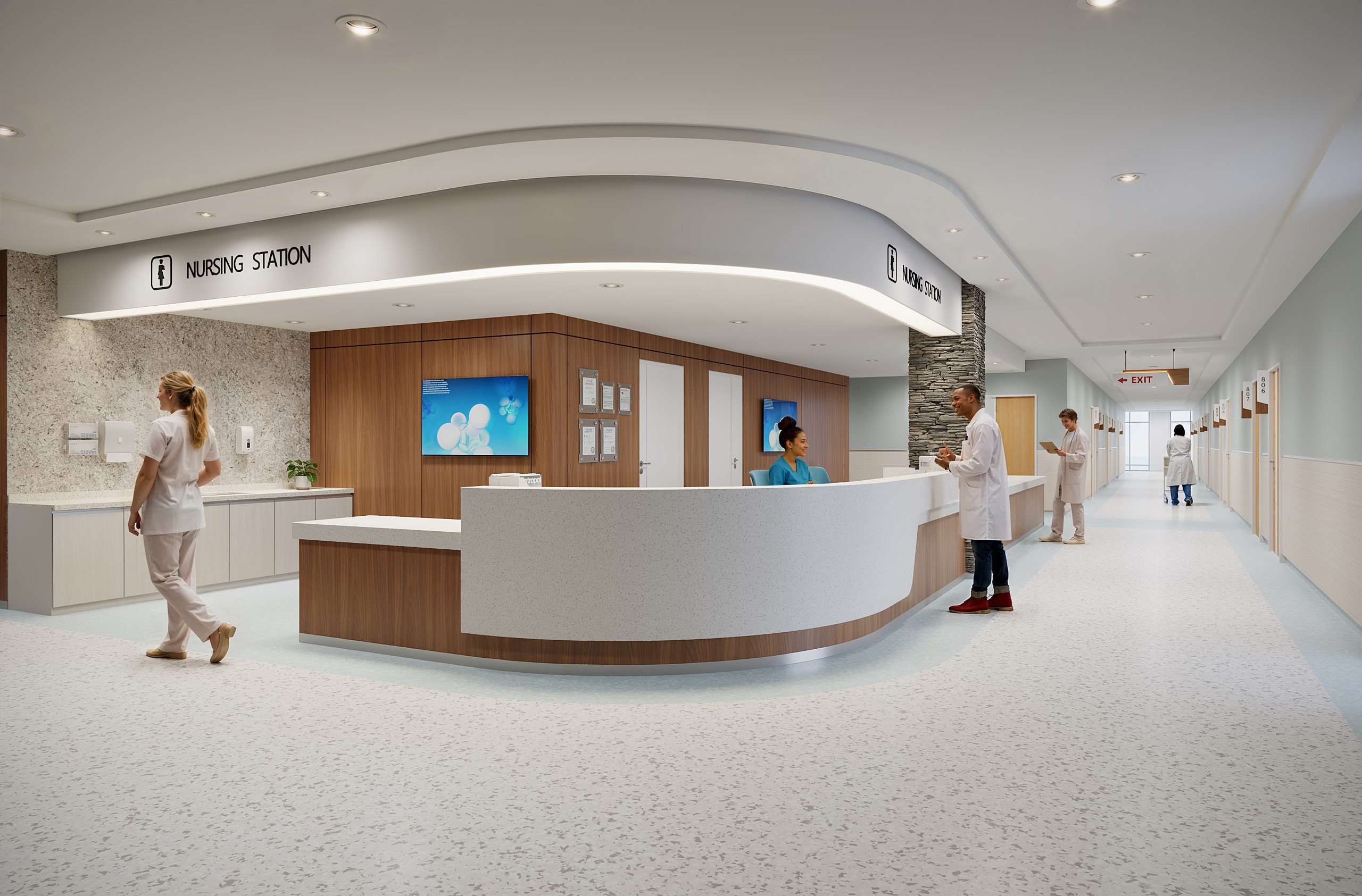
We recently sat down with Harony Sierra, our Customer Success Manager, for the visualization team. We wanted to talk about healthcare visuals and really highlight some of the key elements that go into creating visualizations for healthcare projects. We know that the healthcare industry requires special care and styling compared to other industries and we wanted to give you some insight into the care our team takes with healthcare visualizations.
Check out our conversation with Harony in this article and reach out to our visualization team if you have any questions for your projects.
What are the main differences between healthcare projects and office space projects?
The biggest difference is intention. Office spaces are typically designed to inspire productivity, collaboration, and brand culture. Healthcare spaces are designed to build trust. The emotional stakes are higher. Patients may be anxious, vulnerable, or overwhelmed, so the environment plays a powerful role in how safe and supported they feel. From a client perspective, healthcare projects also tend to involve more stakeholders such as clinical teams, operations, leadership, and facilities. Our visuals need to communicate clearly across all of them while keeping the patient experience at the center.
What varieties of healthcare spaces have you visualized?
We have rendered a wide spectrum of healthcare environments, from large hospital interiors to outpatient clinics, family practices, dental offices, treatment rooms, waiting areas, and staff spaces. Each space serves a very specific purpose. A waiting area might need to reduce anxiety and feel welcoming, while a treatment room needs to communicate precision and efficiency. Our role is to understand what that space needs to do emotionally and functionally, and ensure the render reflects that balance.
Do you take accessibility into account when creating healthcare renders?
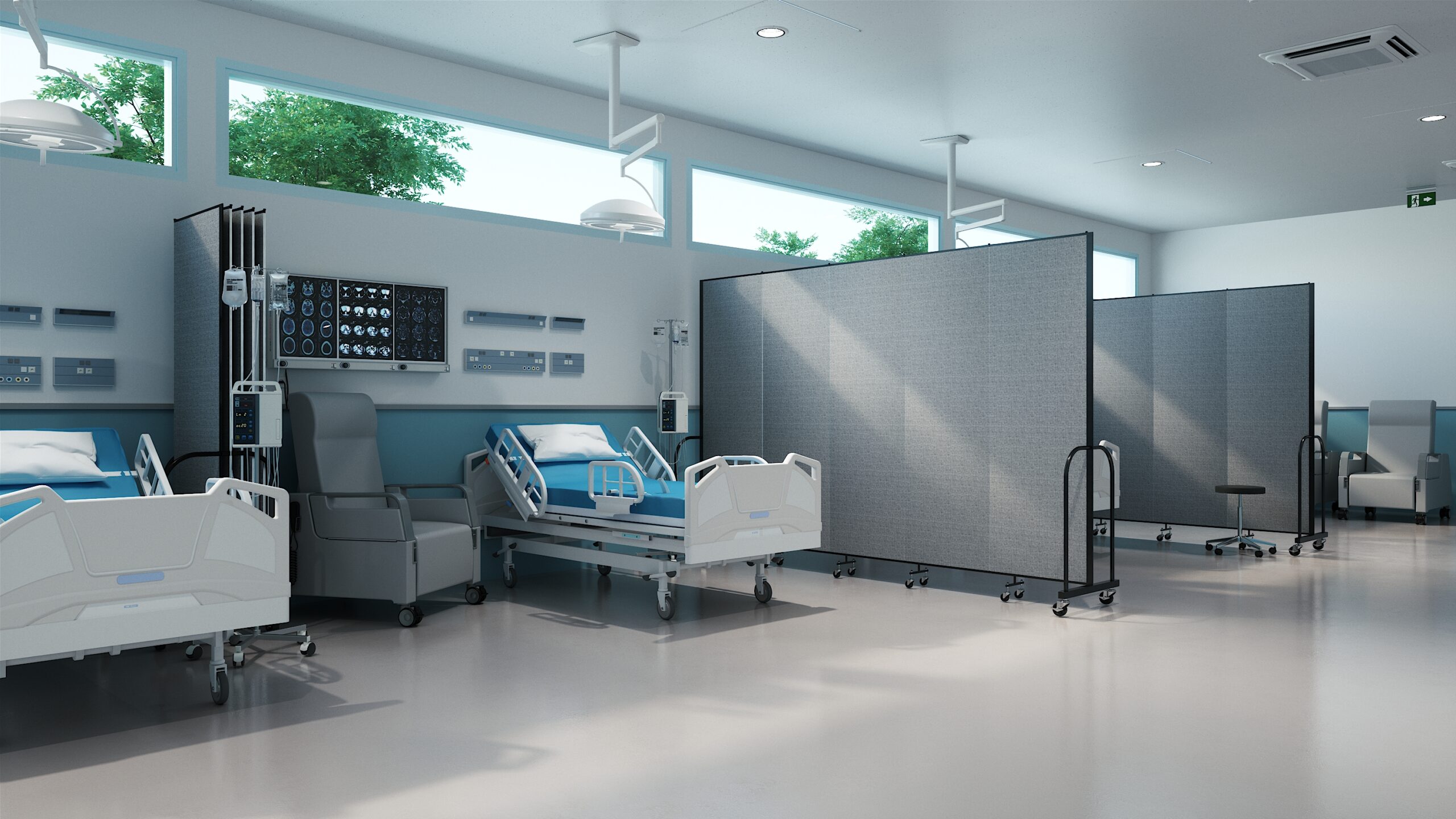
Absolutely. Accessibility is not something we layer on at the end. It is foundational. In healthcare, inclusive design is a baseline expectation. We are mindful of circulation paths, clearances, reception heights, seating variety, and overall flow to ensure the space feels realistic and usable. From a client standpoint, the render must reflect real-world standards so stakeholders can trust that what they are seeing is both thoughtful and practical. From an end-user perspective, accessibility directly impacts dignity and comfort.
Are there features of healthcare products that you are more likely to highlight in a render?
Yes, and we approach it intentionally. In healthcare, product features often support hygiene, durability, ergonomics, and privacy. Rather than calling attention to them in an obvious way, we integrate them naturally so they feel like part of the environment. The goal is to subtly communicate that the space is safe, clean, and well considered without making the render feel overly clinical. Clients want to know their investments are being represented accurately, while still ensuring the space feels human.
Are there any areas in healthcare visualizations that you would say you specialize in?
Where we really add value is in translating complexity into clarity. Healthcare projects often come with layers of operational requirements and technical constraints. Our strength is helping clients visualize those realities in a way that feels cohesive and approachable. We are particularly strong in patient-facing spaces such as reception areas, waiting environments, and exam rooms, where the experience needs to balance warmth with professionalism.
When designing the environments for healthcare renders, what do you take into consideration?
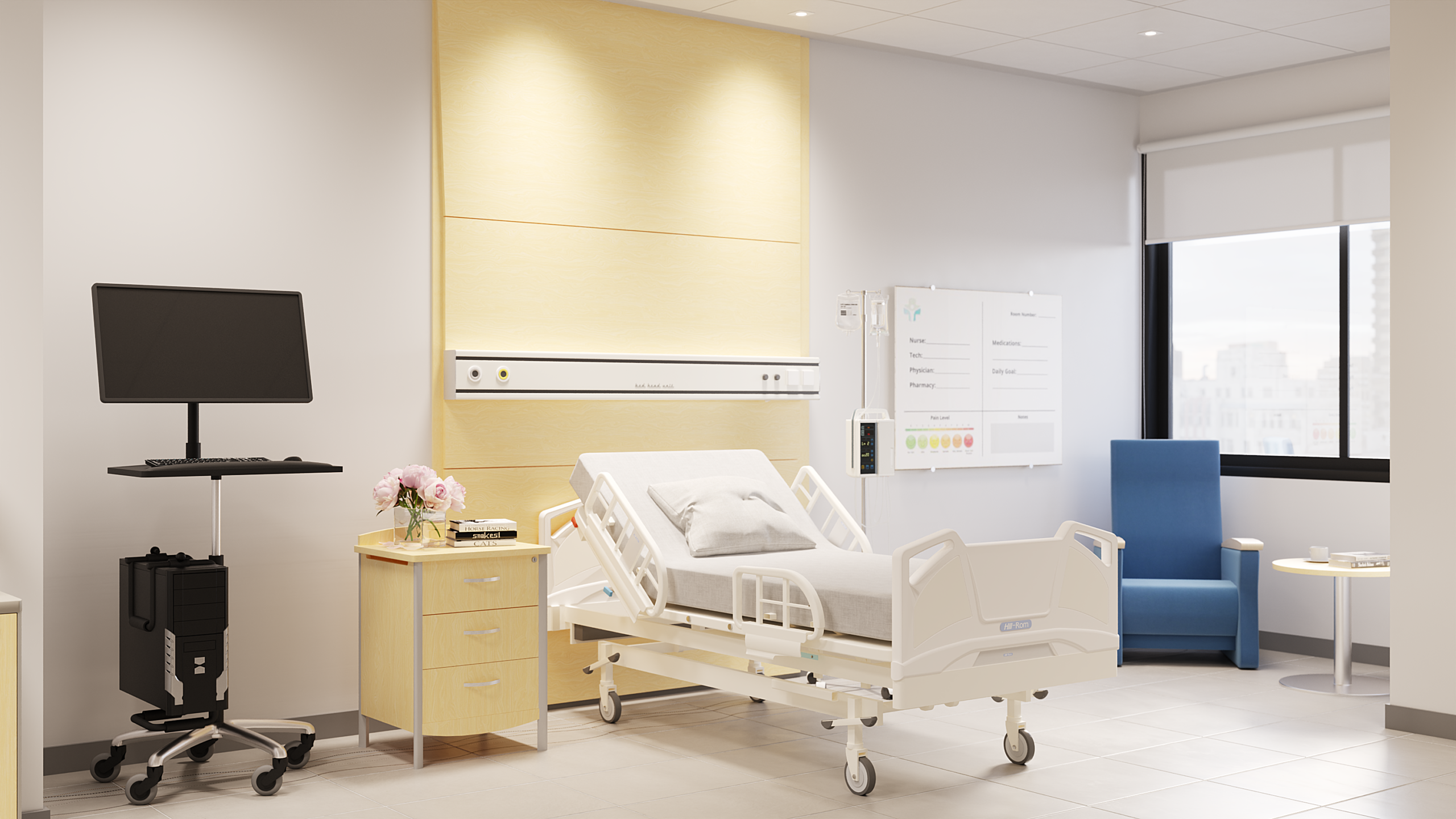
We always think about both the patient and the provider. For patients, we ask whether the space feels calm, intuitive, and respectful. For staff, we consider workflow, visibility, and efficiency. Lighting, material tones, spacing, and scale all shape perception. Healthcare environments have to work very hard behind the scenes, but visually, they should feel effortless. That balance is what we aim to communicate.
Healthcare includes a lot of technology these days. Do you take this into consideration?
Definitely. Technology is embedded in modern healthcare, and it needs to be represented accurately. At the same time, we are mindful not to let it overpower the human experience of the space. We integrate equipment and digital tools in a way that feels seamless and proportionate. The message we want the render to convey is that technology enhances care while still preserving the human element.