
How to Search for a Building Type
Building Types organize your Buildings with like functions together, across all your Customers in SnapTracker. For example, you may want to group all your warehouses under one Building Type for all Customers, and Customers’ onsite Buildings as other Building Types. You can assign only one Building Type per Building.
The Building Type screen enables you to manage the Building Types across your SnapTracker site. Building Types are set up once and accessible to all Customers on the site. Once set up, you can create corresponding Buildings in your SnapTracker database.
The Building Type screen enables you to conduct a search through all existing Building Types to view details and last update dates. You may create new Building Types, or make edits to the existing Building Types, or even delete a Building Type as desired. Note: A Building Type can only be deleted if there are no Buildings assigned to it.
Before starting, make sure:
- You are logged into SnapTracker.
- You have access to the Building Type screen.
This post outlines how to conduct a search for Building Types on your SnapTracker site.
1. In the header section, click Setup.
Note: Depending on your browser, you may need to click the View menu items icon to see Setup.
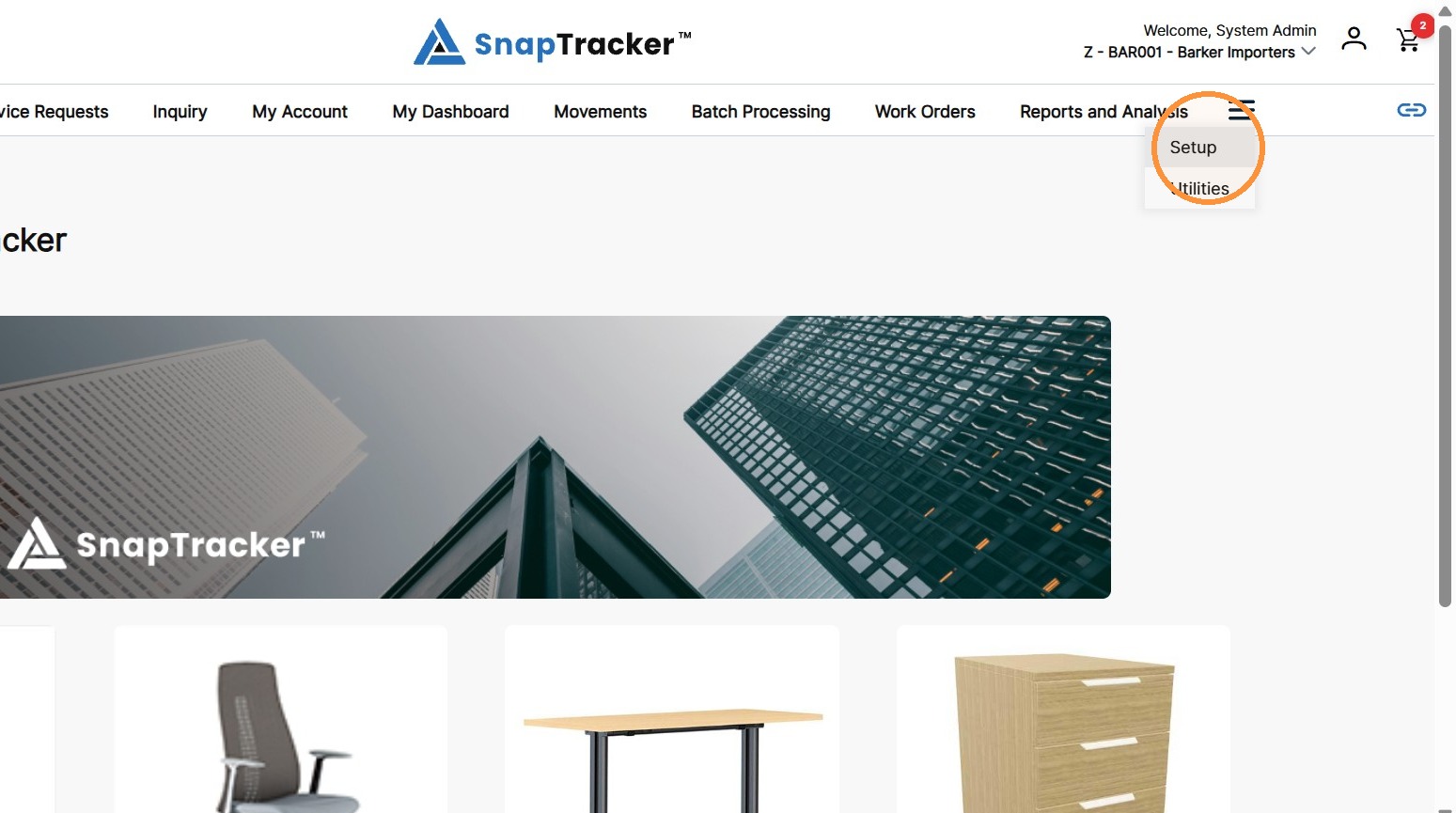
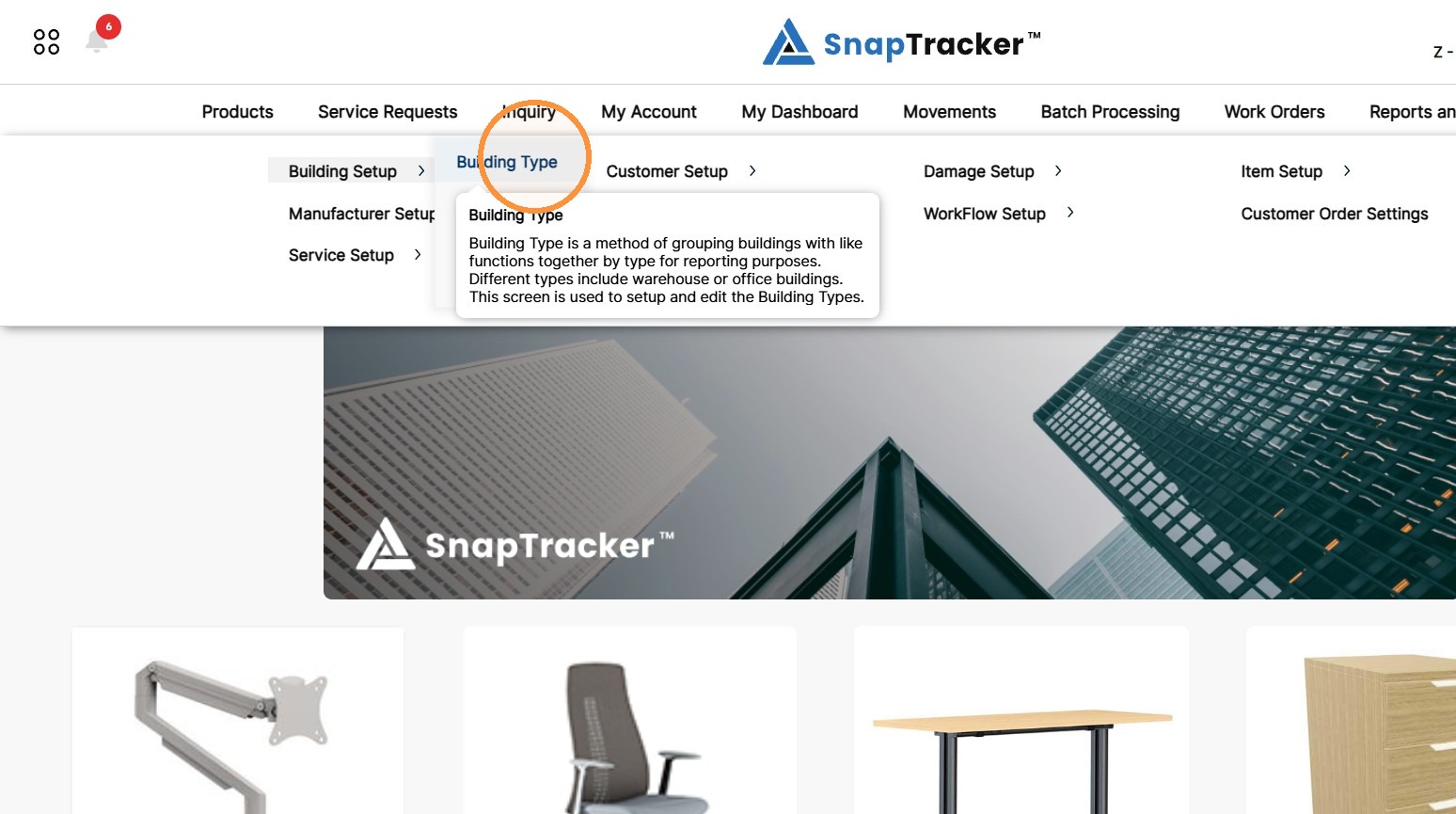
2. Click the arrow beside Building Setup, then click Building Type.
Another way to access the Building Type screen is to navigate to the Setup main screen.
From here, select Building Setup.
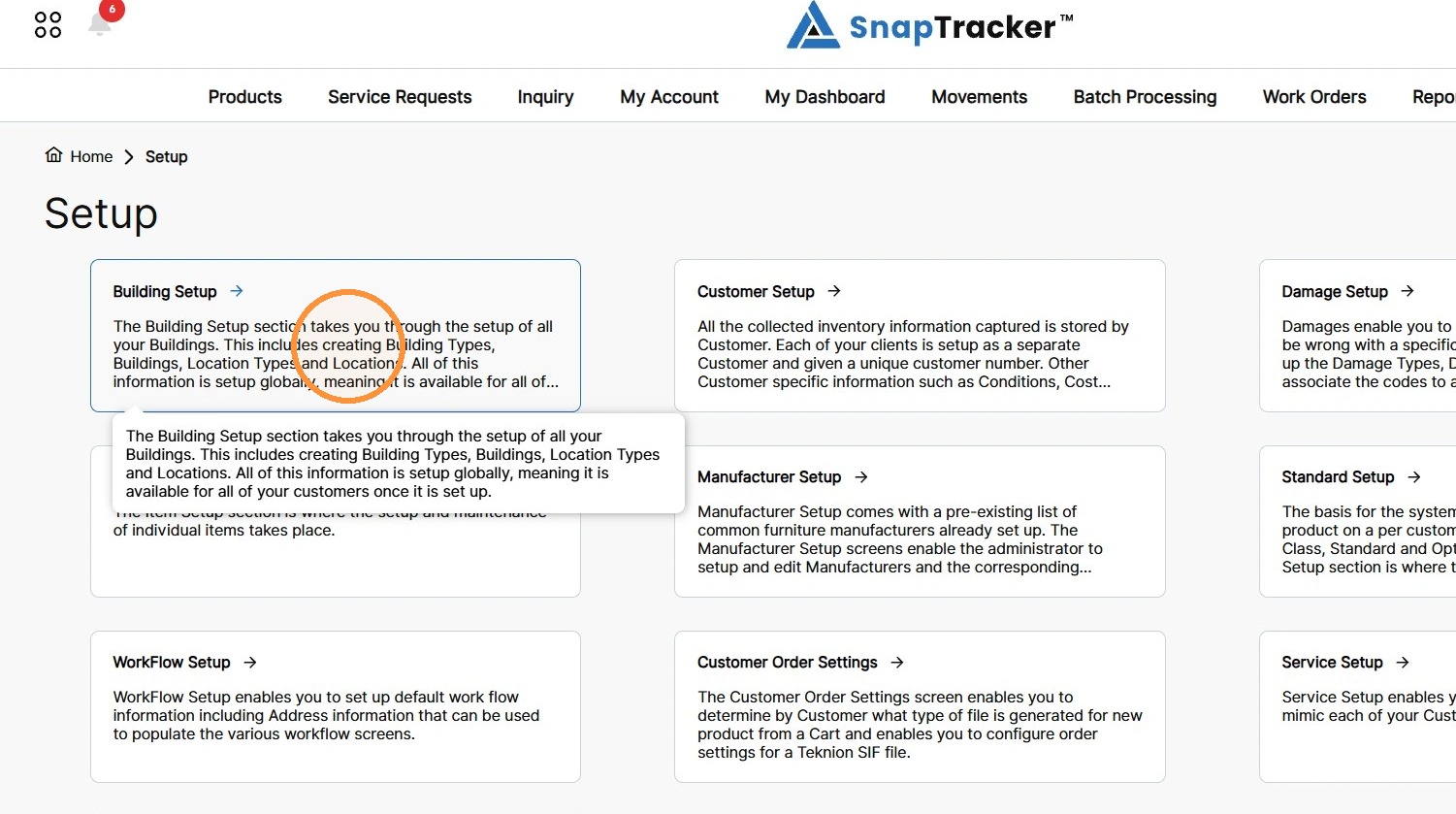
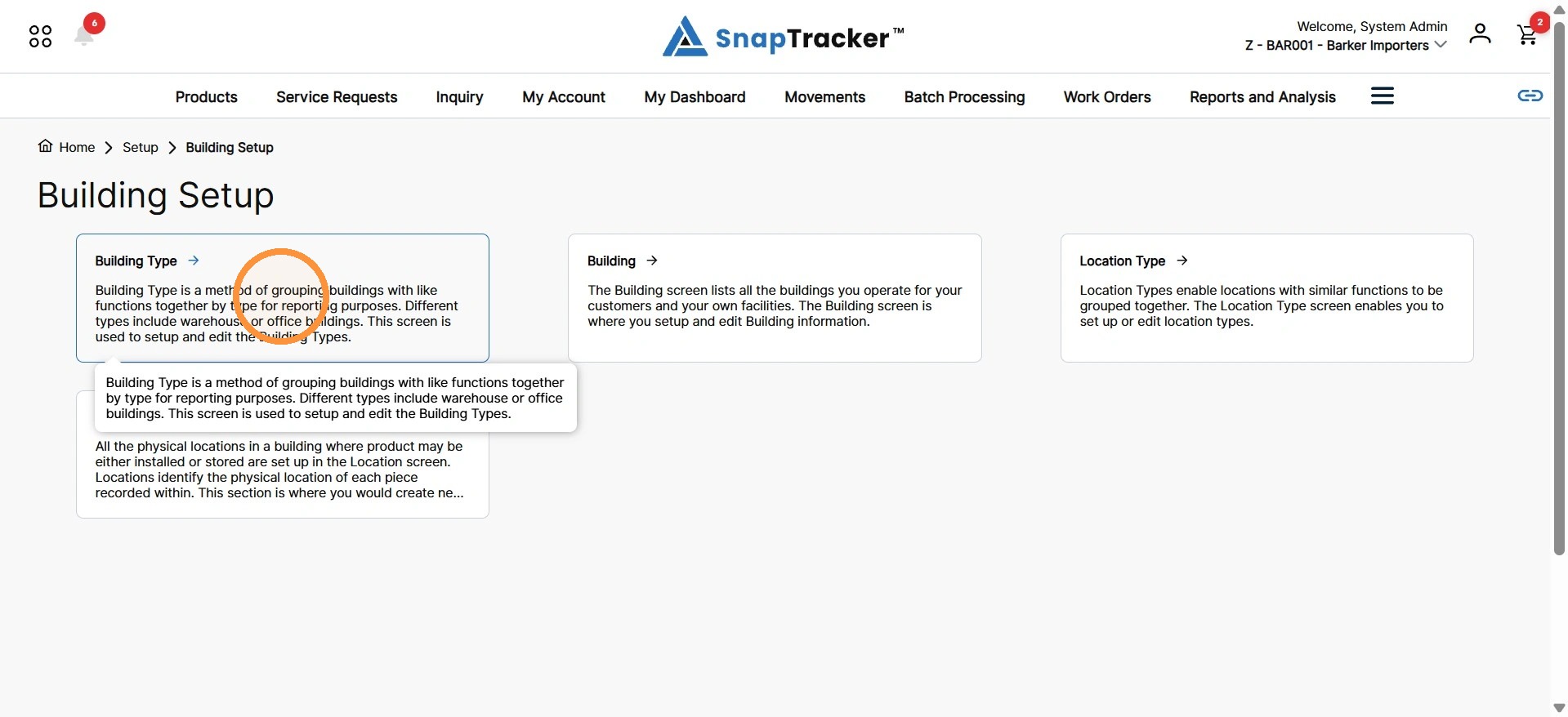
The Building Setup screen displays.
From here, select Building Type.
The Building Type screen displays, with all results.
Note: By default, the results display according to the default filters – Building Types in ascending order.
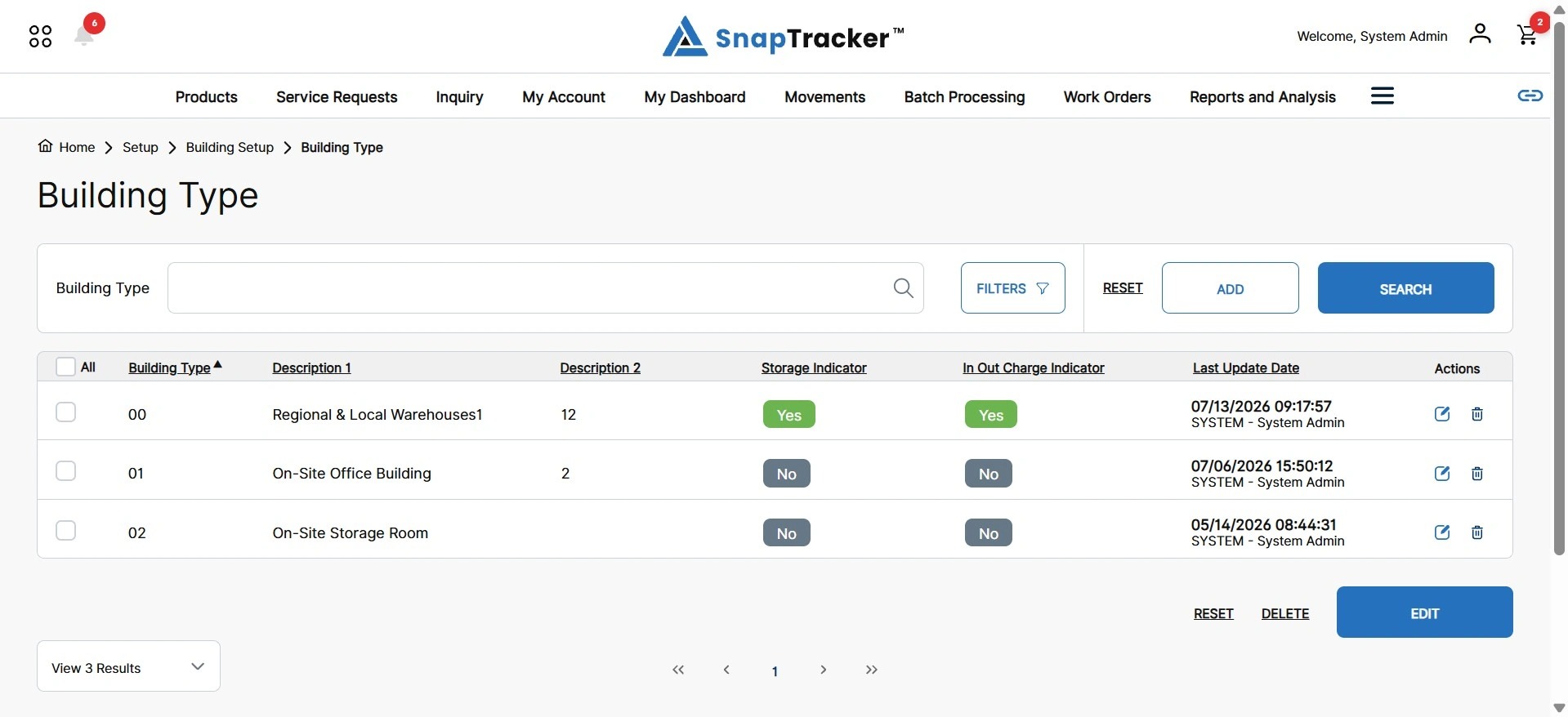
Observe the fields in the results:
- All – Select the checkbox of the desired Building Type(s), or select All, to complete a bulk action.
- Building Type – The Building Type code.
- Description 1 – The first description field for the Building Type.
- Description 2 – The second description field for the Building Type.
- Storage Indicator – Indicates whether or not the Buildings assigned to the Building Type are being used as a storage facility (Yes) or a customer’s office (No). The default is Yes.
- In Out Charge Indicator – Indicates whether or not the Buildings assigned to the Building Type qualify to generate a Piece In/Piece Out Movement Report (Yes/No). The default is Yes.
- Last Update Date – The last date any changes were made to the Building Type and the User that completed the update.
- Actions – Available actions for an existing Building Type. The options are Edit or Delete.
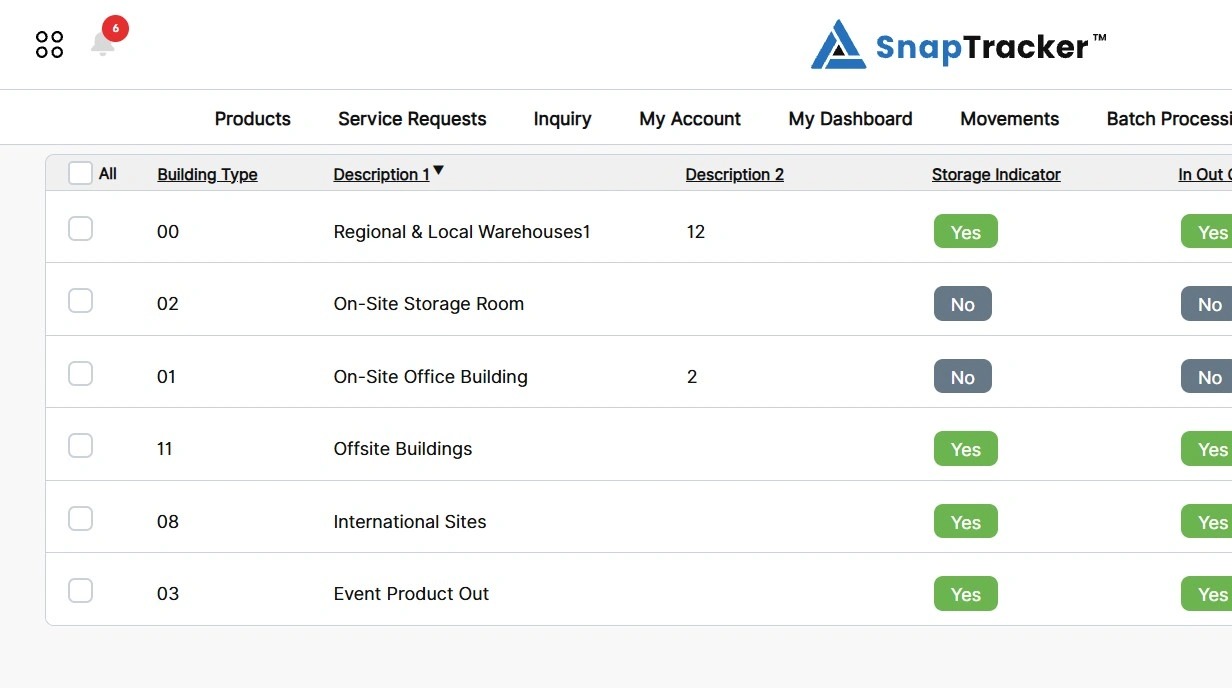
3. To sort the results by a particular field, click the hyperlinked column header.
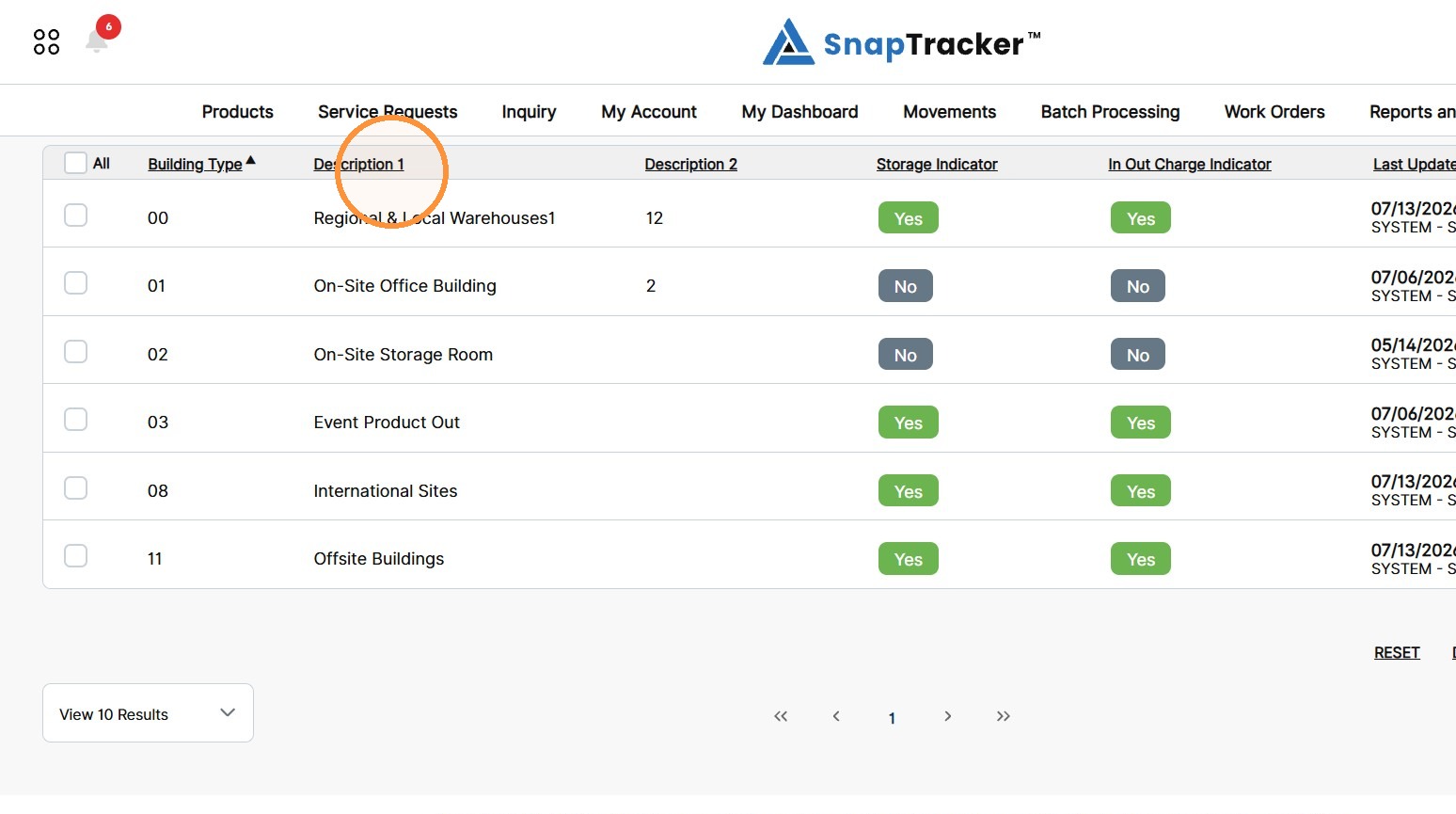
The results update and sort by the selected column, in ascending or descending order as indicated by the respective arrow icon.
4. To conduct a search for Building Types, in the Building Type field, enter thedesired Building Type.
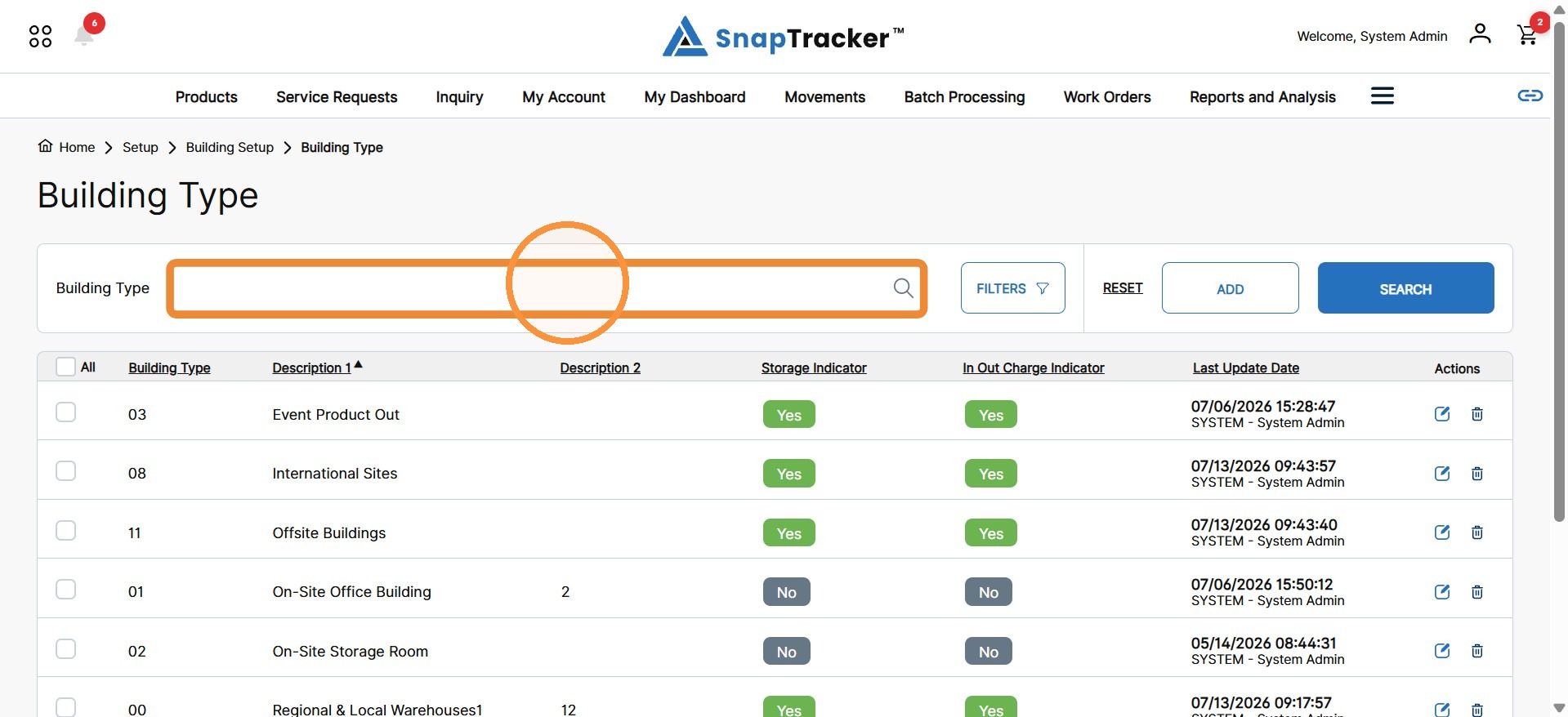
An auto-populated suggestions list displays.
Note: Click X to quickly clear the input field.
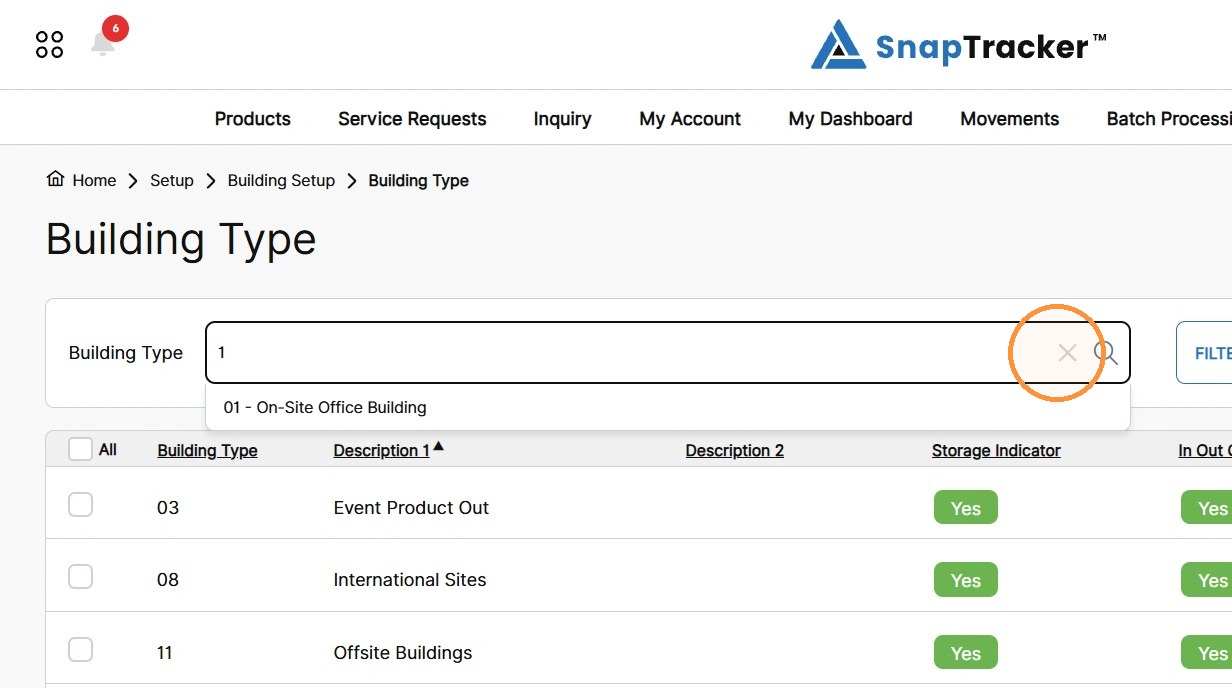
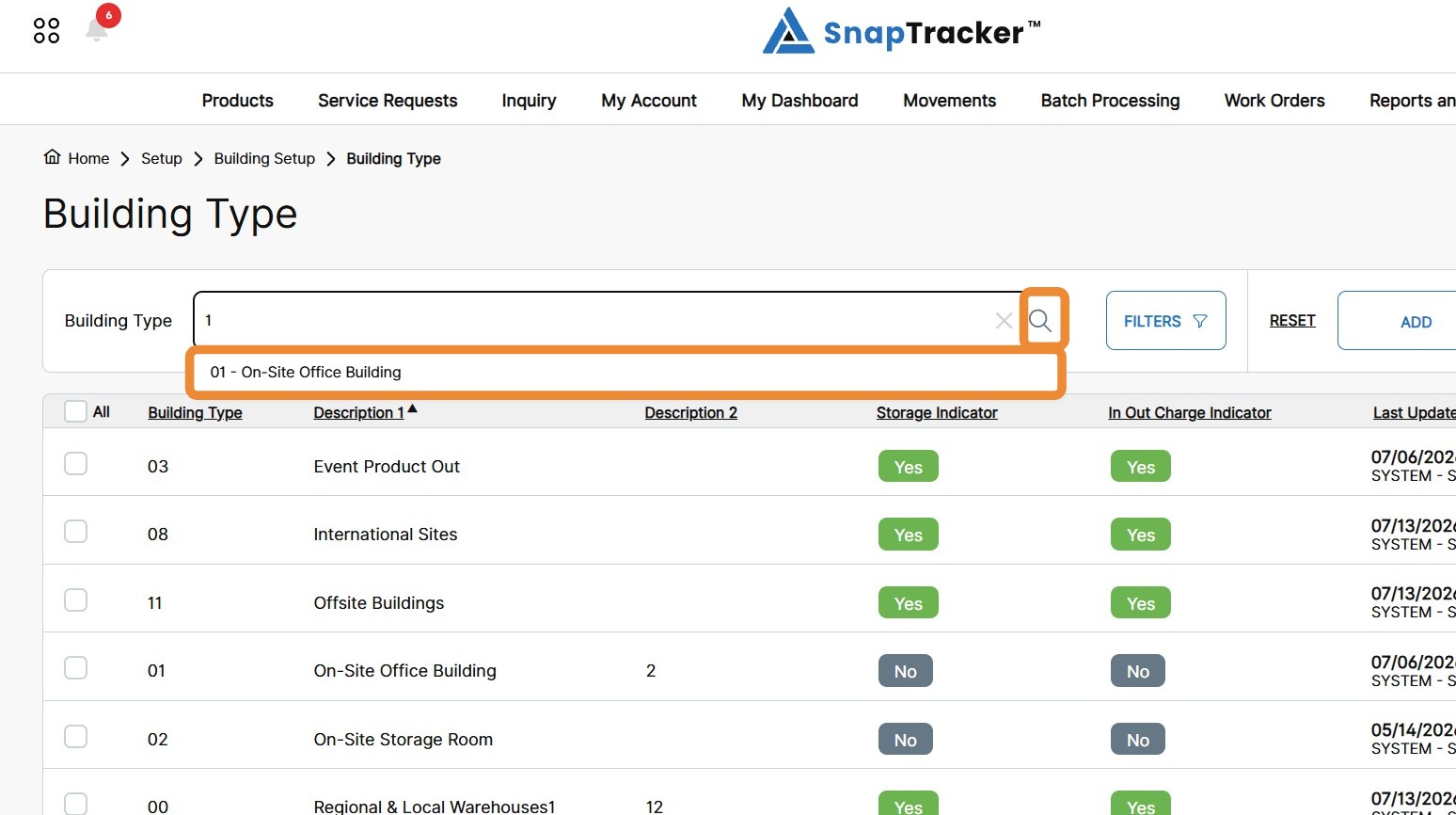
5. Click a specific suggested Building Type, or click Search.
Note: You may also click the magnifying icon in the search field to conduct the search.
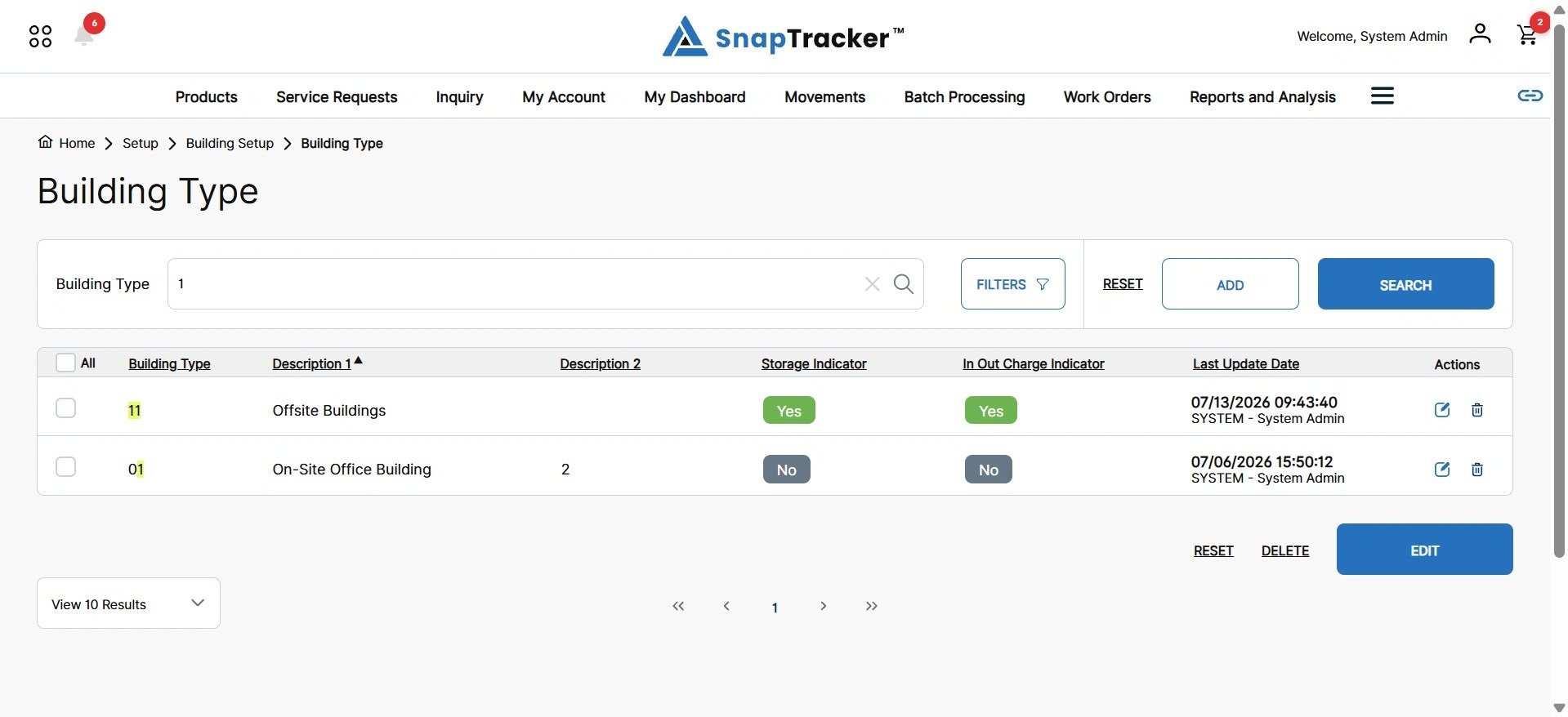
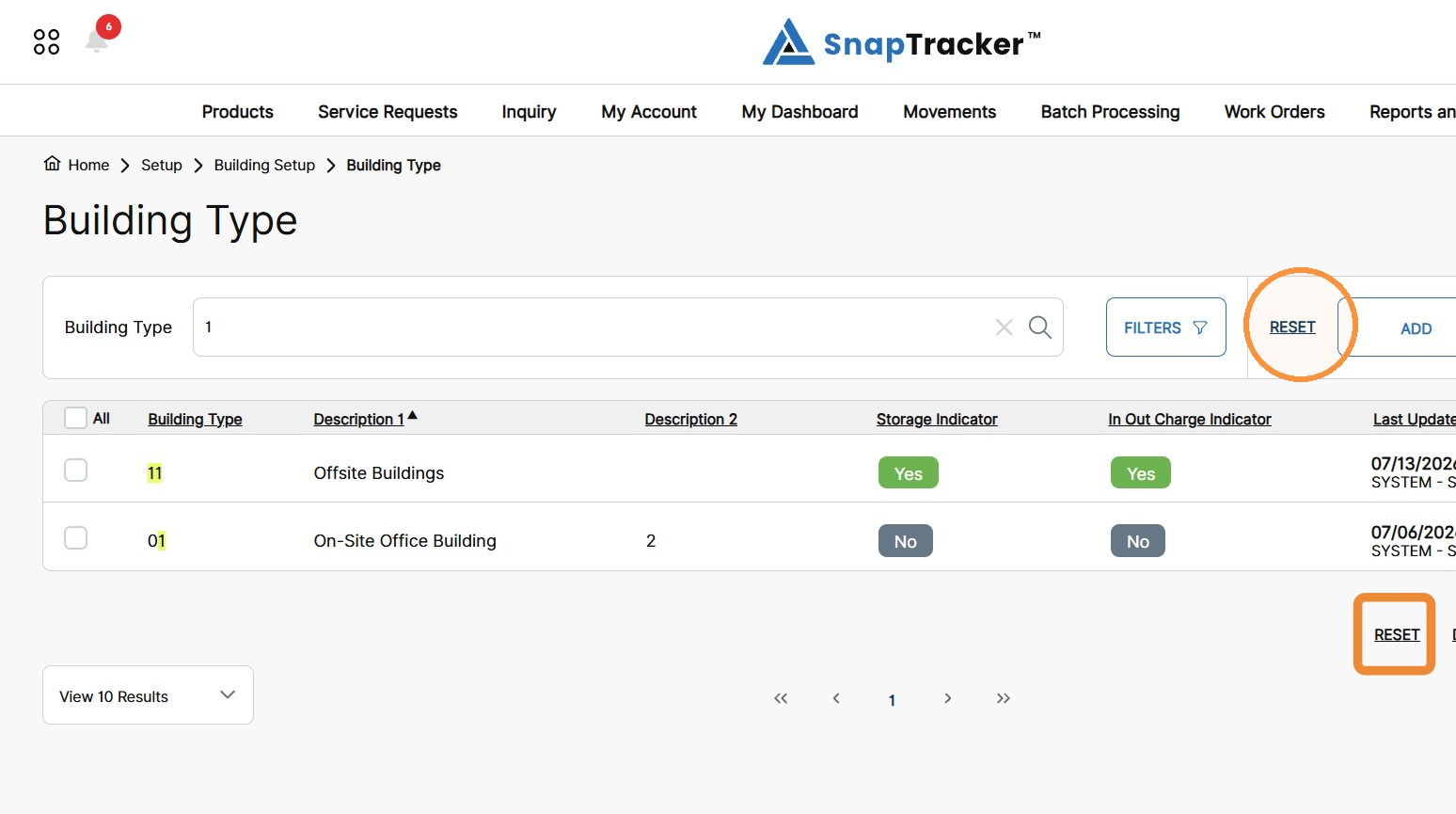
The updated results display, with your search term highlighted in the matching results.
6. To apply additional filters, click the Filters button.
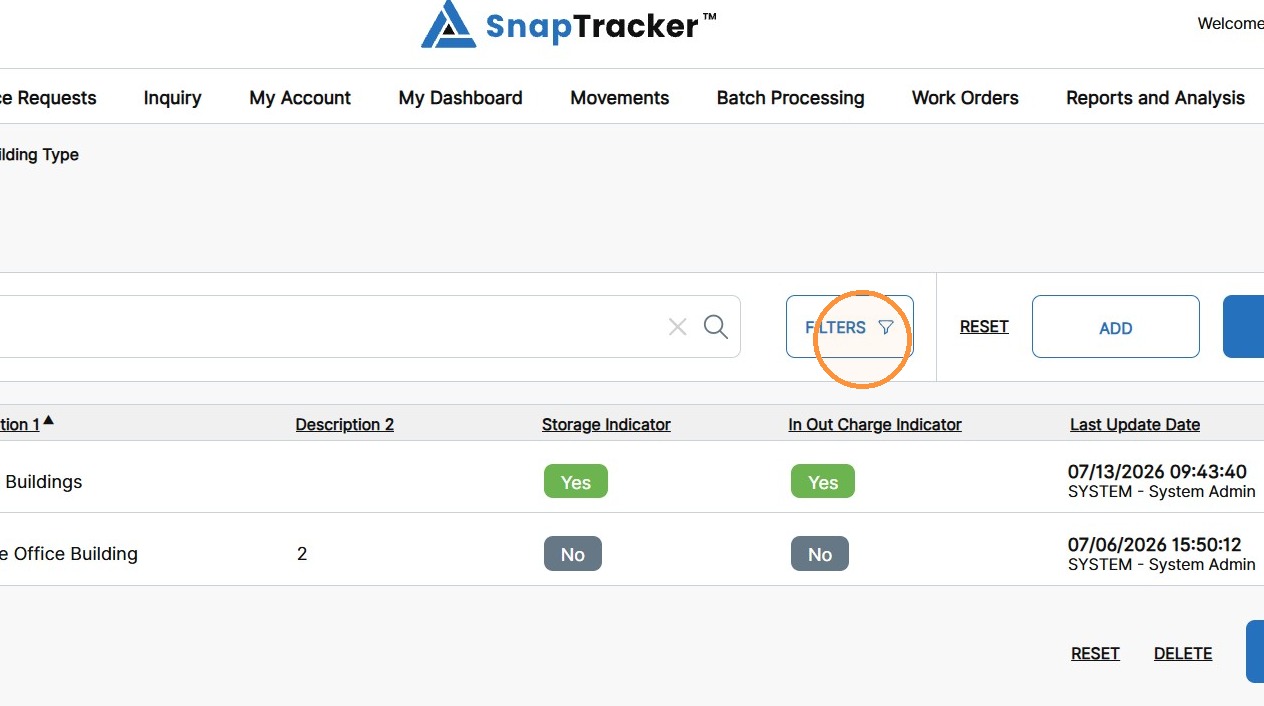
The Filters side panel displays.
Note: The image below is split in 2 in order to show all options.
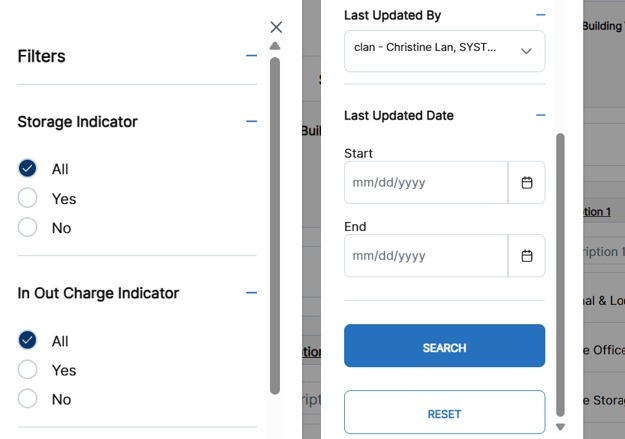
Observe the filter options:
- Storage Indicator – Select the status of Yes or No, or All options for the Storage Indicator.
- In Out Charge Indicator – Select the status of Yes or No, or All options for the In Out Charge Indicator.
- Last Update By – Select one, multiple, or all Users who have made the last update on a Building Type.
- Last Update Date – Select the date range for Building Type’s Last Update Dates.
7. Populate the desired filters and click Search.
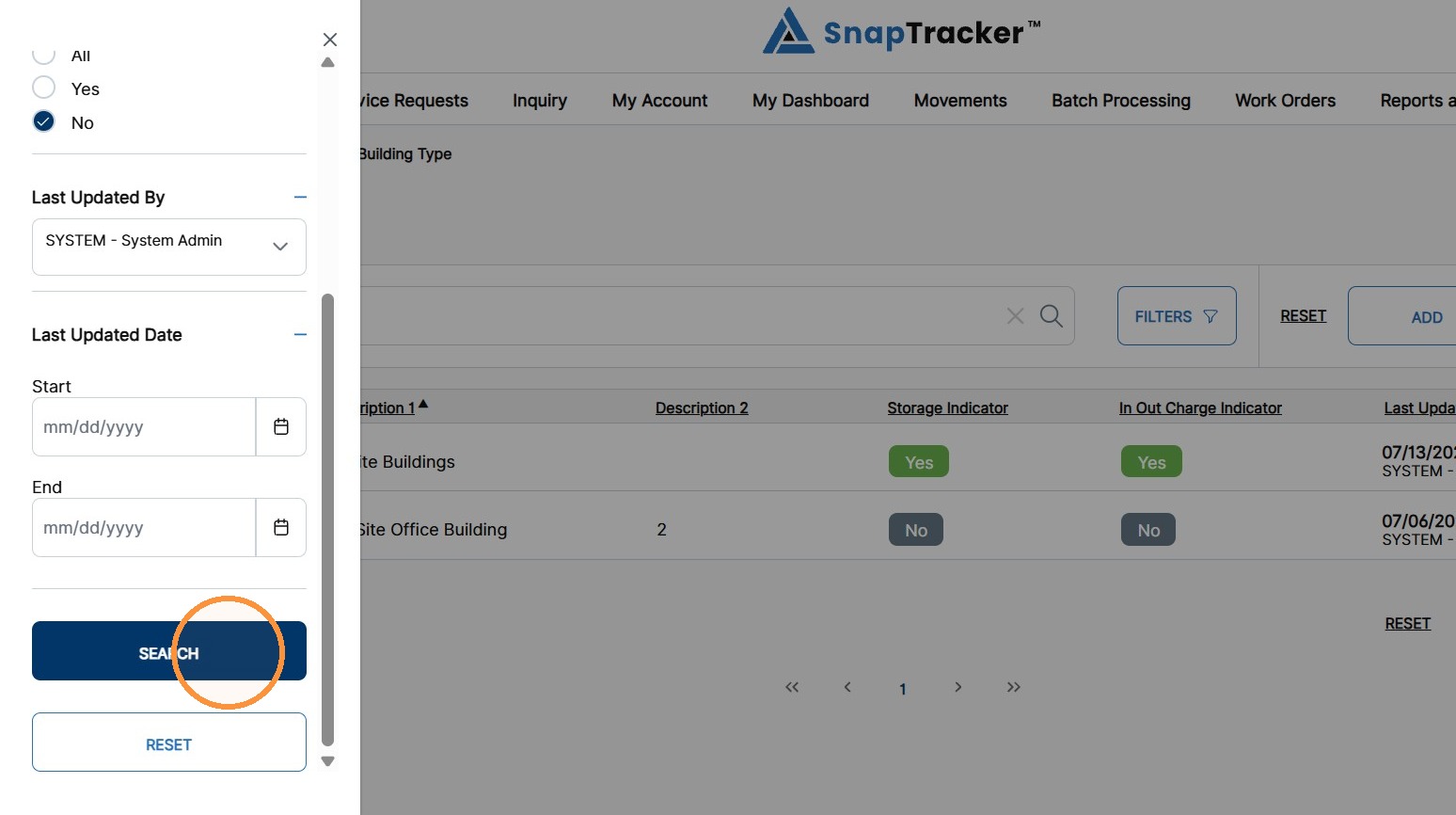
The filtered results display.
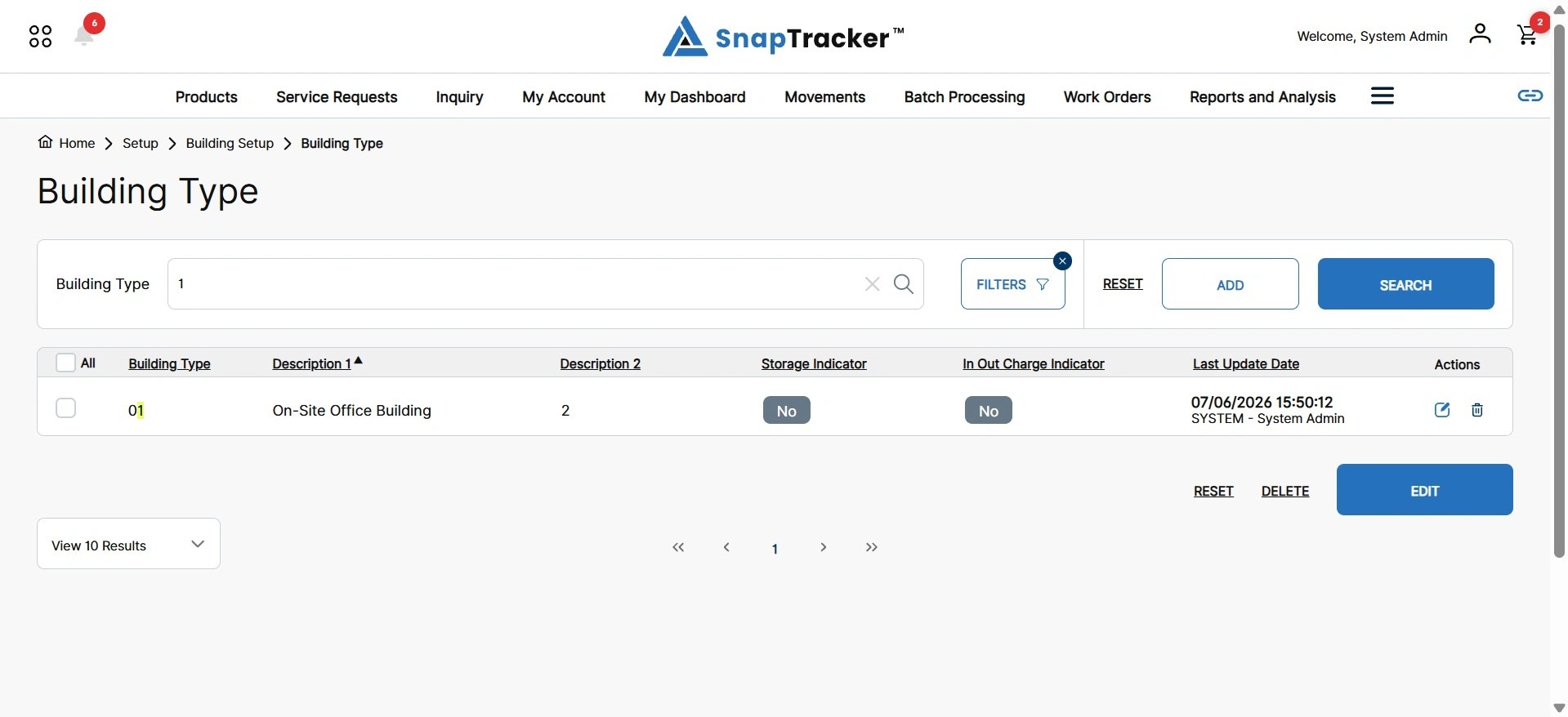
8. To reset the Filters only, click the X icon on the Filters button.
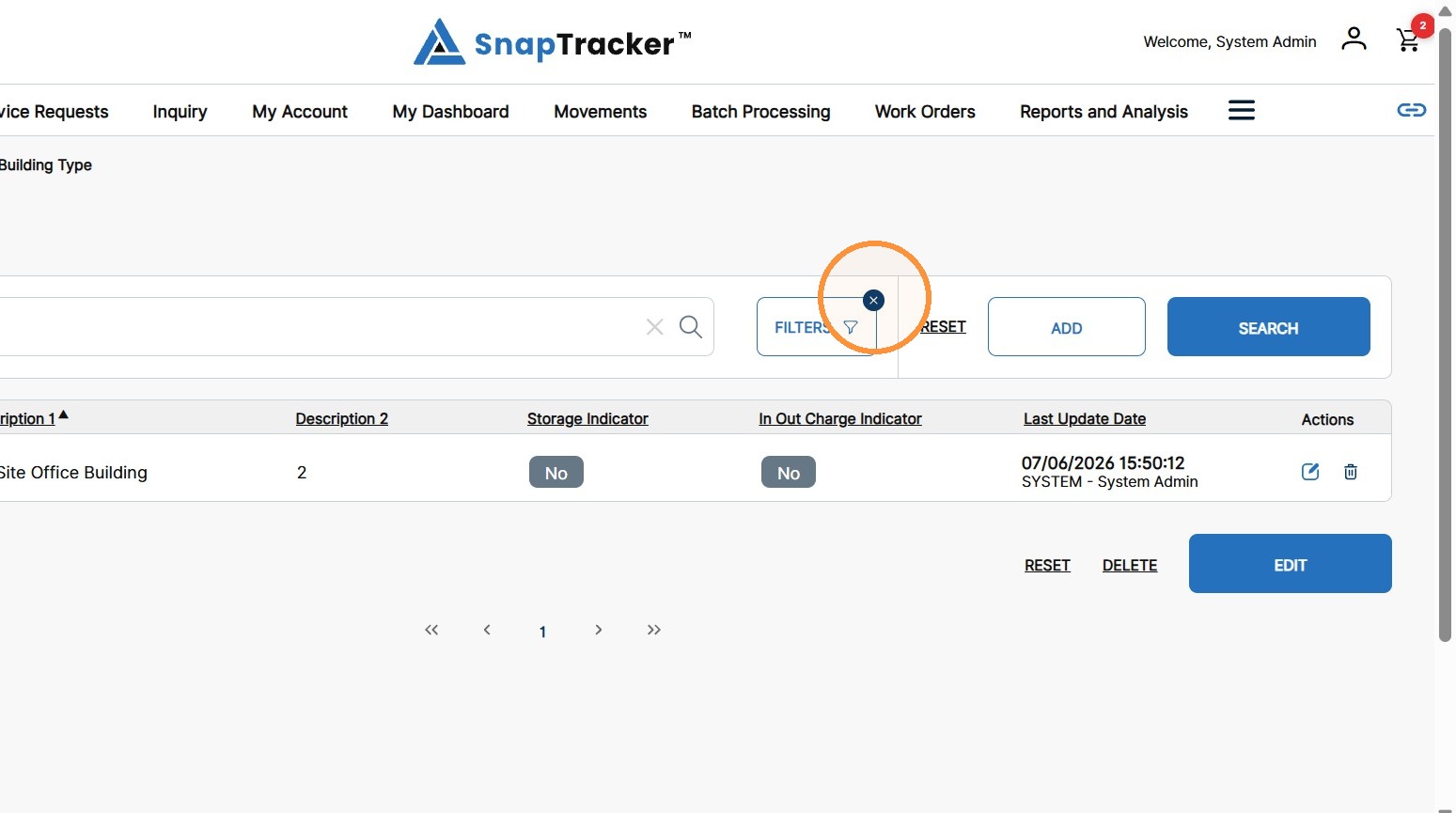
9. To reset all filters and any search inputs, click Reset.
For more information on how to add, edit, and delete a Building Type, see “How to Create, Edit, and Delete Building Types.“